Showing posts with label Smartphone. Show all posts

Wednesday, March 2, 2011

How To Track Your iPad/iPhone/iPod’s Location?

0 comments

How To Track Your iPad/iPhone/iPod’s Location?GadgetTrak provides proven theft recovery solutions for a wide range of portable devices including cell phones, PDAs, removable media devices iPodS. ActiveTrak has announced the release of GadgetTrak 2.5, a new version of its theft recovery software for iOS. The update is available for download from the App Store, and the app costs 99 cents. Tracking data is transmitted over a secure SSL connection and you can even use  GadgetTrak to protect your Mac and Windows laptops visit Trak.me from your device or use the in-app button to setup the tracking.

How To Track Your iPad/iPhone/iPod’s Location?

The GadgetTrak iOS application has been updated and released in to the iTunes Store and allows you to track the location of your iOS devices. GadgetTrak silently reports its location and senses when your iPhone or iPad has significantly changed its location and the GadgetTrak server keeps track of where your phone has been.

With all of the photos, contacts, apps and music on your iPhone, losing it would be a massive pain. Unfortunately, that pain is felt by thousands of smartphone users every day. Ask them—they wish they'd had GadgetTrak installed.

When your device is missing, log into your account using any web browser and enable tracking immediately. GadgetTrak will spring to life and generate location reports, including map points, longitude & latitude and IP address to help you pinpoint your lost device. It can even snap photos of the thief!
For extra security, enable the "Deleting Apps" restriction in Settings App->General->Restrictions. This will keep the thief from deleting GadgetTrak (and any other apps).

But dont forget the application has to be activated before it can start tracking your iPhone or iPad and when it is activated your battery will use more juice than normal.


Features

Location Tracking

If your device has GPS capability it will be used by GadgetTrak to get the most accurate location possible. Even without GPS, GadgetTrak can use cell towers and/or advanced Wi-Fi positioning technology to pinpoint the location of your device usually within a few meters.

IMPORTANT NOTE: Continued use of GPS can dramatically decrease battery life. For better battery performance, deactivate tracking until the device is lost. The GadgetTrak app does not use GPS and will not impact battery life when tracking is disabled (even if the Navigation icon appears).

Push Notifications

GadgetTrak automatically sends a discrete message to your device, enticing the thief to initiate a tracking report.

Camera Reports

Snap a photo with the built in camera(s) to collect crucial evidence to help Police catch the thief. (available for iOS devices with at least one built-in camera, additional in-app purchase required)

GadgetTrak for iOS is part of a suite of products available for a variety of platforms including Mac OS X and iOS. The software enables you to track and recover devices that hve been lost or stolen. New to the 2.5 release of GadgetTrak for iOS is support for cameras. If your iOS device has a built-in camera – such as an iPhone or iPod touch – GadgetTrak will snap photos to help you ad the police identify the thief and location where the device is. The photo can now be attached to an e-mail; the e-mail also includes location information.

Additional Features

• Locate your device using GPS, cell tower triangulation, and/or WiFi positioning
• Location reports posted to the web control panel at http://trak.me
• Location history to know where your phone has been
• Automatic push notifications
• Camera support for the front and rear-facing camera (in-app purchase required)
• Secure SSL connection for transmitting location data & photos
• Cross Platform: GadgetTrak has apps to protect your laptop (Mac & Windows) as well as Android and BlackBerry phones and tablets.

Need Help?

Download the GadgetTrak iOS Installation & Usage Manual here: http://www.gadgettrak.com/support/downloads

http://www.gadgettrak.com/products/iphone/

We take pride in providing great support for all of our products. If you have questions, concerns, or feedback let us know and we'll get back to you as quickly as possible: http://www.gadgettrak.com/support

What's new

• Remotely capture a photo with all built-in cameras, then email it to yourself to help catch the thief! (via a one-time In-App Purchase)
• Push notifications – Send a discrete message to your device enticing the the person who has it to initiate a tracking event.
• Various Bug Fixes.

GadgetTrak now being offered with select warranty plans ActiveTrak has announced that its GadgetTrak Laptop 3 software is now being bundled We contacted GadgetTrak and they sent us all the information we needed to recover the iPod. Luckily it was not necessary to go to the police.

System Requirement
  • Requires iOS 4 or higher
  • Background processing only supported on iPad, iPhone 3GS, iPhone 4, and iPod touch 3rd generation or newer
Continue Reading

Monday, February 28, 2011

Most Wanted Windows Phone 7 Series Differences Today

0 comments

Most Wanted Windows Phone 7 Differences TodayWindows Phone 7 is a mobile operating system developed by Microsoft, and is the successor to its Windows Mobile platform. It is aimed at the consumer market Check out for Windows Phone 7 coverage, including up-to-the-minute news about the latest tablet announcements, in-depth reviews, blog posts, and videos at Most Wanted Windows Phone 7 Differences Today.

One question we hear often is: What’s next for Windows Phone? We’re obsessive about listening closely to our customers and improving our phone software. So over the next few months, look for updates that add some new features you’ve asked for and also tune up your phone’s performance. We've got a serious hands on for you to check out, but here is everything that you need to know.

Most Wanted Windows Phone 7 Differences Today

The name—Windows Phone 7 Series—is a mouthful, and unfortunately, the epitome of Microsoft's worst naming instincts, belying the simple fact that it's the most groundbreaking phone since the iPhone. It's the phone Microsoft should've made three years ago. In the same way that the Windows 7 desktop OS was nearly everything people hoped it would be, Windows Phone 7 is almost everything anyone could've dreamed of in a phone, let alone a Microsoft phone. It changes everything. Why? Now that Microsoft has filled in its gaping chasm of suck with a meaningful phone effort, the three most significant companies in desktop computing—Apple, Google and Microsoft—now stand to occupy the same positions in mobile. Phones are officially computers that happen to fit in your pocket.

Windows Phone 7 is also something completely new for Microsoft: A total break from the past. Windows Mobile isn't just dead, the body's been dumped, buried and paved over by a rainbow brick road.

The Interface

It's different. The face of Windows Phone 7 is not a rectangular grid of thumbnail-sized glossy-looking icons, arranged in a pattern of 4x4 or so, like basically every other phone. No, instead, an oversized set of bright, superflat squares fill the screen. The pop of the primary colors and exaggerated flatness produces a kind of cutting-edge crispness that feels both incredibly modern and playful. Text is big, and beautiful. The result is a feat no phone has performed before: Making the iPhone's interface feel staid.

Most Wanted Windows Phone 7 Differences TodayIf you want to know what it feels like, the Zune HD provides a taste: Interface elements that run off the screen; beautiful, oversized text and graphics; flipping, panning, scrolling, zooming from screen to screen; broken hearts. Some people might think it's gratuitous, but I think it feels natural and just…fun. There's an incredible sense of joie de vivre that's just not in any other phone. It makes you wish that this was aesthetic direction all of Microsoft was going in. Another, sorta similar interface, in terms of data presentation, is this Android Slidescreen app, which gives you a bunch of info up top.

Most Wanted Windows Phone 7 Differences Today

Windows Phone 7 is connected in the same sense as Palm's webOS and Android, with live, real-time data seamlessly integrated, though it's even smoother and more natural. Live tiles on the Start screen, which you can totally customize, are updated dynamically with fresh content, like weather, or if you've pinned a person to your Start screen, their latest status updates and photos.

Most Wanted Windows Phone 7 Differences Today

The meat of the phone is organized around a set of hubs: People, Pictures, Games, Music + Video, Marketplace, and Office. They're kind of like uber-applications, in a sense. Massive panoramas with multiple screens that are each kind of like individual apps. People, for instance, isn't just your contacts, but it's also where social networking happens, with a real-time stream of updates pulled in from like Facebook and Windows Live. (No Twitter support announced yet, it appears—a kind of serious deficiency, but one we're sure will be remedied by ship date.)

As another example, Music + Video is essentially the entirety of Zune HD's software, tucked inside of Windows Phone 7. A piece of interface that's shockingly not there: A desktop syncing app. If anyone would be expected to tie their phone to a desktop, you'd think it'd be Microsoft, but they're actually moving forward here. All of your contacts and info sync over the air. The only thing you'll be syncing through your computer is music and videos, which is mercifully done via the Zune desktop client.

Most Wanted Windows Phone 7 Differences Today

Hello, Connected World

The People hub might be the best social networking implementation yet on a phone: It's a single place to see all of your friends' status updates from multiple services in a single stream, and to update your own Facebook and Windows Live status. Needs. Twitter support. Badly. But you have neat things going on, like the aforementioned Live tiles—if you really like someone or want to stalk them hardcore, you can make them a tile on your Start screen, which will update in realtime with whatever they're posting, and pull down their photos from whatever service. There's also your very own profile page, where you can scan your current social state and post updates to multiple services simultaneously.

All of your contacts are synced and backed up over-the-air, Android and webOS style, and can be pulled from multiple sources, like Windows Live, Exchange, etc. Makes certain other phones seem a little antiquated with their out-of-the-box Contacts situation.

Faster apps and games

“Nobody likes to wait. That’s why we’ve whittled down the time it takes for apps and games to start up and resume. It’s all part of our focus on getting you to the things you love, easier and faster.”

Better Marketplace search

“We’ve streamlined Marketplace search to make it easier to find specific apps, games, or music. Press the Search button in the apps or games section of Marketplace and you’ll see only apps or games in the results.”

Holy Crap! The Zune Phone!

Microsoft's vision of Zune is finally clear with Windows Phone 7. It's an app, just like iPod is on the iPhone, though the Zune Marketplace is integrated with it into the music + video hub, not separated into its own little application. It's just like the Zune HD, so you can check out our review of that to see what it's like. But you get third-party stuff like Pandora, too, built-in here. Oh, and worth mentioning, there will be an FM radio in every phone (more on that in a bit).

Most Wanted Windows Phone 7 Differences Today

Pictures is a little different though, and gets its very own hub. That's because it's intensely connected—you can share photos and video with social networks straight from the hub, and via the cloud, they're kept in sync with your PC and web galleries. The latest photos your friends post also show up here. Of course, you get around with multitouch zoom and zip-zip scrolling stuff.

Most Wanted Windows Phone 7 Differences Today

Xbox, on a Phone

I'll admit, I very nearly needed to change my pants when I saw the Xbox tile on the phone for the first time. Obviously, you're not going to be playing Halo 3 on your smartphone (at least not this year), but yes, Xbox Live on a phone! It's tied to your Live profile, and there are achievements and gamer points for the games you can play on your phone, which will be tied to games back on your Xbox 360.

If Microsoft's got an ace-in-hole with Windows Phone 7, it's Xbox Live. Gamers have talked about a portable Xbox for years—this is the most logical way to do it. The N-Gage was ahead of its time. (Okay, and it sucked.) The DS and PSP are the past. The iPhone showed us that the future of mobile gaming was going to be on your phone, and now that just got a lot more interesting. The potential's there, and hopefully the games will be plentiful and awesome enough to meet it.

Most Wanted Windows Phone 7 Differences Today

Browser and Email

Yes, the browser is Internet Explorer. And yes, the rumor's true: It won't be as fast as Mobile Safari. Not to start. But it's not bad! Hey, least it's got multitouch powers right out of the box. Naturally, you've got multiple browser windows, and you can pin web pages to the Start screen, like any other decent mobile browser.

The Outlook email app makes me question how people read email on a BlackBerry. It is stunning. I never thought I'd call a mail app "stunning," but, well, it kind of is. It's the best looking mobile mail app around. Text is huge. Gorgeous. Ultrareadable. Of course, it's got Exchange support too.

Most Wanted Windows Phone 7 Differences Today

Apps, Office and Marketplace

Remember what I said earlier about Windows Mobile being dead? So are all the apps. They won't work on WP7. Sorry Windows Mobile developers, it's for the best. Deep down, we all knew a clean break was the only way Windows Phone wasn't going to suck total balls.

Apps will have some standardized interface elements, like the app bar on the bottom for common commands. But here's a question: Will they multitask? Um, that depends on your definition of multitasking! When we asked Joe Belfiore, the guy running Windows Phone, he alluded to live tiles and feeds as some ofthe ways that third-parties will be able to "bring value to the user, even when their apps aren't running." Which sounds to us like a big ol' "shnope," but we'll see more next month at Microsoft's developer event MIX.

The Marketplace is where you'll buy apps. Since we've got like 6 months 'til Windows Phone 7 launches and people should be excited to develop for it, hopefully there'll be plenty of stuff to buy there on day one.

Most Wanted Windows Phone 7 Differences Today

Naturally, Bing and Bing Maps are built into the phone as the default search and maps services. They're nice, smartly contextual, and very location-oriented. Bing's also used for universal search on the phone, via a dedicated Bing button. (There is no search but Bing search, BTW.) Bing Maps is multitouchable, with pinch-to-zoom. It's rich, with built-in listings with reviews and clever ways of searching for stuff. And yeah, Office! It's connected to that cloud thing, for OTA syncing and such. Business people should be happy.

Hardware and Partner

Another way the old Windows Mobile is dead is how Microsoft's handling partners and hardware situation. With Windows Mobile, a phonemaker handed Microsoft their monies, and Microsoft tossed them a software kit, and that was that. Which is why a lot of Windows Mobile phones felt and ran like crap. And why it took HTC like two years to produce the HD2, the most genuinely usable rendition of Windows Mobile ever.

Microsoft's not building their own phones, but they're going to be picky, to say the least, with Windows Phone 7. Ballmer phrases it as "taking more accountability" for people's experiences. There's a strict set of minimum hardware requirements: a capacitive, multitouchable screen with at least four points of touch; accelerometer; 5-megapixel camera; FM radio; and the like. There are serious benchmarks that have to be met. And only chosen OEMs get to build the phones now, not like before, when anybody with $20 could get a license. The OEMs that Microsoft's announcing they're working with at launch are: Qualcomm, LG, Samsung, Garmin Asus, HTC, HP, Dell, Sony Ericsson, and Toshiba. AT&T's their "premiere partner" in the US (dammit). (Take note people! Premiere does not mean exclusive!)

Every phone will have a Bing (search) button and a Start button. Custom skins, like the minor miracles HTC worked, are now banned. The message to hardware makers is clear: It's a Windows Phone, you're just putting it together. Basically, phonemakers get to decide the shape of the phone, and whether or not there's a keyboard.

One other word on hardware, in a manner of speaking. Hardware it won't work with? Macs. Which is kind of stupid to us—a lot of the people Microsoft wants to use Windows Phone 7, like college students, have been going Mac in droves. You wanna lure them back Microsoft? Let them use your phone with any OS.

Most Wanted Windows Phone 7 Differences Today

The Big Picture

Windows Phone 7 Series is, from what we've seen, exactly what Microsoft's phone should be. It's actually good. It brings together a bunch of different Microsoft services—Zune, Xbox, Bing—in a way that actually makes sense and just works. But there's a real, lingering question: Are they too late? The first Windows Phone 7 Series…phone—goddamn that is a stupid name—won't hit until the end of this year. That's more than three years after the iPhone, two years after Android, hell, even a year after Palm, the industry's sickly but persistent dwarf.

Most Wanted Windows Phone 7 Differences Today

History is on Microsoft's side here—we know what happened the last time Apple had a massive head start. (Update: To be clear, in computing.) Microsoft is, if nothing else, incredibly patient. Remember the first Xbox? Back when it was crazy that Microsoft was getting into videogames? It's cost them about a billion dollars and taken nearly 10 years, but now, with Xbox Live, Project Natal and their massive software ecosystem, they arguably have the most impressive gaming console you can buy. That was a pet project. Now, mobile is the future of computing. What do you think Microsoft will sink into that?

The mobile picture is now officially a three-way dance: Apple, Google, and Microsoft. The same people who dominate desktop computing. Everybody else is screwed. Former Palm CEO Ed Colligan famously said a few years ago: "PC guys are not going to just figure this out. They're not going to just walk in." That's precisely what's just happened. Phones are the new PCs. PC guys are the new phone guys.

This action is pretty logical: Microsoft employees want Windows Phone 7 to succeed than the average outside developer, and so allowing employees to gain financially through their app development efforts is a big incentive to come up with interesting app ideas Windows Mobile for the next generation dubbed Windows Phone 7 Series upon its launch at MWC.

Continue Reading

Sunday, February 27, 2011

Most Wanted Smartphone 2011 By Platform

0 comments

Most Wanted Smartphone 2011 By PlatformWith so many choices of mobile phones, each with similar and yet intriguingly different “operating systems” on offer, which are the key phones, to look out for, on each platform? Here is my take on what’s a good bet for Apple, webOS, BlackBerry, Windows Phone 7, Android, and Symbian operating systems based on what is around at the moment. The most important thing about your next phone isn't what carrier it's on, how big the screen is, or even who makes it. So here are Most Wanted Smartphone 2011 on every platform.

Apple

Most Wanted Smartphone 2011 on Every Platform

There isn’t a lot of choice when it comes to Apple operating systems so the iPhone 4 is the obvious current bet. The iPhone 4 features one of the highest resolution screens currently available on a smartphone, at 960×640, and it manages to fit it into a 3.5” display. The on-board camera can record HD video at 720P with it’s 5 megapixel camera. There are a couple of internal storage items (16GB and 32GB).

However, you might want to hold off until there is news of the iPhone 5. There has been a whisper that news is due in March 2011 (but don’t hold me to it!), Source: Sky News:  iPhone 5 To Be Revealed 2 March. However, from that article the image associated with that particular announcement looks more like an iPad announcement.

What others say: Engadget: iPhone 4 review, “We’re not going to beat around the bush — in our approximation, the iPhone 4 is the best smartphone on the market right now”.

webOS

Most Wanted Smartphone 2011 on Every Platform

Recently picked up by HP the Palm is another one with not a lot of choice which is a shame as it has a great operating system. The current Palm Pre features a 3.1” screen with a resolution of just 320×480. The camera is a 3 megapixel and storage is 8GB. However, the Pre does have a slide out mini keyboard in its favour.

So, the Palm Pre is the one to watch – but you might consider holding off until the recently announced Palm Pre 3, featuring an all new version of webOS, is launched.

What I said: Initial thoughts on the Palm Pre, “The Pre is functional yet lacks that real WOW factor, my theory is that is probably because the App Catalog is so bereft of diverse applications – perhaps the firmware upgrade to 1.2 will open a new world for the Pre?”.

What others say: IT Pro: Palm Pre Review, “It’s slicker than using Symbian, arguably more pocketable than its top rivals the HTC Hero and iPhone and a valuable and valid alternative to the ever-expanding sea of Android phones we seem to be pelted with on a weekly basis these days”.

BlackBerry

Most Wanted Smartphone 2011 on Every Platform

The BlackBerry Torch 9800 boasts the latest revision of RIM’s operating system.  The Torch 9800 features a 3.2” screen (3.18” diagonally) with 480×360 pixels, similar to the Palm Pre. Talking of similarities to the Pre the Torch also boasts a slide-out mini keyboard. The onboard camera is 5 megapixel and storage is made up of 4GB inboard storage and a 4GB media card.

With the latest developments in the operating system the traditionally enterprise-centric BlackBerry range are starting to shine and could be one to watch.

What I said: A Look At The BlackBerry Torch 9800, “Overall the BlackBerry Torch 9800 is an attractive phone that is packed full of features. A little streamlining may be required on the user interface but all in all its a big step in the right direction.”.

What others say: CNET: BlackBerry Torch 9800 review, “There’s not much that the BlackBerry Torch 9800 can’t do, but it doesn’t make it easy. Pricey, chunky, and packed with features, this is a smart phone whose function beats form — and fun.”.

Windows Phone 7

Most Wanted Smartphone 2011 on Every Platform

There are a number of handsets on offer running the all new Windows Phone 7 (and with the recent partnership with Nokia there are likely to be even more).

NOTE! The Phone 7 operating system is in the early part of its lifecycle so be ready for a few teething problems.

However, at the moment the HTC HD7 is well worth a look. Sporting a 4.3” screen with a resolution of 480 x 800 and a 5 megapixel camera on board the HTC HD7 can record 720P HD Video. This is backed up with a 1 GHz processor and 16GB  of internal storage.

What others say: Tech Radar: HTC HD7 review, “We like the HTC HD7 as a phone – it builds nicely on the HD2 without being a complete revamp.The Windows Phone 7 experience is ace on it, and simply just works, which is all we’re really looking for at this early stage.”.

Android

Most Wanted Smartphone 2011 on Every Platform

Whilst other manufacturers like to fiddle with the operating system, adding layers of “functionality” here and there, the Google Nexus S keeps to the essential nature of the Android operating system and features a nifty Super AMOLED screen.

Other features of the Google Nexus S include a 4” screen with a resolution of 480×800. There are two cameras available, a front-facing VGA camera and a 5 megapixel camera. The processor is 1GHz and storage is 16GB.

What others say: Pocket-Lint: Google Nexus S review, “Some say that Android is still too raw as a consumer operating system, but we have to disagree. Android in its naked form is slick, fast and powerful; it is refreshing to come back to the basic underlying OS and get away from all the additional layers that manufacturers plaster on top.”.

Symbian

Most Wanted Smartphone 2011 on Every Platform

Symbian, unfortunately, is starting to feel the pressure against more modern mobile operating systems however the Nokia N8 is a great phone with some excellent video recording and it features the latest Symbian ^3 for Nokia.

The Nokia N8 features the most impressive camera in this list offering a 12 megapixel (and it has a secondary VGA camera for video calls) whilst the 3.5” screen has a 16:9 nHD resolution of 640×360 AMOLED pixels. Standard storage is 16GB.

What others say: What Mobile: Nokia N8 Review, “HD video, a 12-megapixel camera, a great display, good battery life, loads of connectivity options and a great design. As long as you can accept minimal apps and games, the N8 is great.”

Continue Reading

Most Wanted Smartphone Mobile App Stores

0 comments

Most Wanted Smartphone Mobile App StoresDiscuss ‘bout Smartphone Mobile App Stores, it's been less than a year since Apple launched the iPhone App Store, but now virtually every mobile OS is showcasing its own take on the mobile application storefront. How do they all stack up? Here the top list of Most Wanted Smartphone Mobile App Stores.

The first thing you'll notice about these efforts—coming from such traditionally competitive companies as Palm, BlackBerry, Nokia and Microsoft—is just how similar they all sound. App World? App Catalog? App Market? Mobile Marketplace? This outward likeness actually runs pretty deep—these stores are advertising uncannily similar feature sets, for both users and developers:

Most Wanted Smartphone Mobile App Stores

Although it might not evident in the feature-by-feature breakdown above, there are two distinct kinds of app store: The primary store, which is the first and only source of an OS's apps (see Apple), and the secondary store, which is built around an existing stock of third-party apps, and with preexisting developers in mind (see BlackBerry, Microsoft, and Nokia). It's a combination of these different lineages and divergent policy choices that make the smartphone app store experience so varied.

Most Wanted Smartphone Mobile App StoresApple's iPhone App Store
At least for now, the App Store is the standard by which all others are judged. Beyond that, it's given us a rough guide for what works. With a $99 dollar developer's fee and a novice-friendly SDK, the barriers of entry for an iPhone developer are fairly low. Distribution, payments and to a large extent marketing are managed by iTunes, which iPhone owners are necessarily familiar and comfortable with.

And, of course, there's the iPhone: This store may only serve one handset (and its very similar nonphone brother), but it's a wildly popular one. This makes the app store uniquely attractive to developers, because it provides access to the largest uniform app-buying market in the world. Microsoft can argue that Windows Mobile 6.5 will connect developers to x gajillion different customers through y zillion different handsets, but this variety is a curse: Handsets have different resolutions, processors, 3D hardware, input types and basic feature sets. A motion-sensing 3D game with a GPS social networking feature won't work on a lot of WinMo handsets, but a 2D, keypad-controlled Asteroids clone won't make a developer rich.

But the App Store is far from perfect. Apple, like all App Store owners, has the final say in what gets listed, delisted or banned, and they aren't afraid to remind us of this. Along with the typical risque/racist/infringing content prohibitions, Apple enforces strict and often limiting rules against apps that compete with the iPhone's native set—iTunes, Mail.app, Safari to name a few—and apps that their partnered carriers aren't too fond of, i.e video streaming and tethering apps. Now, all these rules are showing signs of loosening with OS 3.0, but as long as the App Store is the sole source of iPhone apps, any rules will seem like too many rules—especially if you're accustomed to a totally unregulated system like Windows Mobile 6.1's. Hence, the gray market.

Most Wanted Smartphone Mobile App StoresAndroid App Market
This second major entrant into the app store race represents a consciously different approach than Apple, but not in that many ways. Immediately, we see a lot to compare: A single-handset userbase (at least for now), low costs for developers and a presence as the primary—though not sole—source of apps from Day One.

But the App Market is a different breed than the App Store. Most importantly, it's not the only place you can get apps. Google has been much more lenient about what they allow in their store since the beginning but in the rare case that they don't approve of an app, as in the case of tethering apps earlier this month, you can just go download an .APK file and sideload it onto your G1 anyway. This is a healthy middle ground for everyone involved; Google doesn't alienate users by destroying entire categories of apps, but isn't forced to come into conflict with carriers because of overly liberal policies. Google has also made their Market more friendly to consumers, with a no-questions 24-hour return policy.

Great! Then why is the App Market so underwhelming? Well, the G1 wasn't exactly a runaway hit, and the store got off to a slow start. Paid apps weren't made available for months after launch, and when they arrived they didn't benefit from the convenience and familiarity of a storefront like iTunes. Moreover, there's no guarantee that things will change that much in the coming months—more handsets from more manufacturers will boost Android's user numbers, but will lead to the WinMo-style toxic fragmentation that Apple so adamantly avoids.

Most Wanted Smartphone Mobile App StoresBlackBerry App World
Matt took a dive into the newest mobile app store, and found it agreeable, but not spectacular. RIM's is the beginning of this "secondary" app store concept, and it shows: You'll be hard-pressed to find anything here that wasn't previously available elsewhere. It is simply an aggregator for existing applications.

This was a given, as developers have been cranking out BlackBerry apps for years now. But App World was a great opportunity for RIM to give the lethargic dev community a shot in the arm. Instead of doing that, they've made the store almost hostile to would-be app writers.

Listing your wares in App World costs a hefty $200, which gives you the right to upload 10 apps, but doesn't come with any new SDKs or development tools. The payment system is Paypal, which is clumsy to use and a pain to set up. A minimum non-free price tier of $2.99, probably intended to filter out spammy apps and cover Paypal's transaction fees, discourages developers from even trying to make simple, useful apps, eliminating the $.99-to-$1.99 sweet spot that has been central to Apple's success. App World feels like an afterthought, and a reluctant one. UPDATE: It should be noted that the 70% dev revenue share figure in the chart is incorrect, and has been update to 80%—a marked advantage over the other stores.

Most Wanted Smartphone Mobile App StoresWindows Mobile Marketplace
With Windows Mobile 6.5, Microsoft will introduce the Windows Mobile Marketplace. So far, their announcements have shown an awareness of the pitfalls of both Apple's and RIM's approaches: They're emphasizing non-exclusivity and app approval transparency, a 24-hour return policy and wide device support, but also making sure to get big-name app and game developers on board to ensure that users actually have something new to look forward to at launch.

On the developer side, it's a mixed bag. As in every other store, the dev take-home is 70% of each sale, but the listing fees aren't great. $99 gets you five apps a year, but anything beyond that will cost an additional $99. I'm sure this will help vaccinate the Marketplace against the fart app epidemic that Apple has proven so prone to, but it'll do so at the expense of potentially useful free and $0.99 apps—again, a crucial price range. One important factor that's still TBD is the payment system. Microsoft says they'll support both credit card payments and carrier charges, but hasn't yet said how that'll look. In both cases the process will need to be as seamless as possible.

Most Wanted Smartphone Mobile App StoresNokia Ovi Store
You probably haven't heard much about this store, set to debut within a month, but it's kind of a big deal for the 40m+ Symbian S40 and S60 users that it'll serve apps to. It's planned to shoehorn into Nokia's new Ovi app suite, which we were introduced to with the XpressMusic 5800, and provide a go-to source for not just apps, but ringtones, wallpapers, and basically everything else that you might have found in a 2001 vintage carrier WAP store.

There has been a decided lack of fanfare surrounding this launch, probably because there just aren't that many Nokia smartphones in the US. But its success or failure will be informative: It will be the most open of all the app stores. For the time being, there is no developer fee, and app listings are free and unlimited. You can easily publish tons of different kinds of content—Flash Lite apps, Java apps, Native S60 apps, multimedia uploads and others—which will be subject to a vetting process that Nokia has assured will be minimal. As Nokia-averse Americans, we can view the Ovi Store as an experiment in laissez-faire app-mongering—a multi-handset, mixed-media, unfiltered feed of Symbian content.

Most Wanted Smartphone Mobile App StoresPalm App Catalog
And finally, we have Palm's App catalog. This is the store we know the least about, but that is already set for a different course than all the others. At launch, the only handset it'll serve will be the Pre—though Palm has indicated that other WebOS handsets are inevitable. It'll be the first—and likely exclusive—source of WebOS apps, and developers will be furnished with a solid, though fundamentally limited, SDK.

Palm's still-vague plan for the App Catalog will no doubt be central to the success or failure of the Pre, but we can make an educated guess at what to expect, assuming that Palm doesn't get taken over by idiots in the next couple months: Palm will vet the apps thoroughly, provide an in-house payment system, and make development simple and cheap (previewed Mojo SDK apps have shown great promise). The end result will probably look something like the iPhone App Store, but with one huge difference: there will be no local natively running apps—the Mojo SDK doesn't provide for that, just for what amount to turbocharged, locally-stored web apps. Granted, these web apps will have privileged access to some of WebOS's core functions, but it's doubtful that high-end gaming, as we've seen on the iPhone, will even be possible on the platform. These limitations (along with WebOS's multitasking advantages) will affect the nature and quality of the apps that are listed in the store much more than the Catalog's policies, though exactly how, we'll have to wait and see.

Continue Reading

Saturday, February 26, 2011

10 Must Have iPhone Apps for 2011

1 comments

10 Must Have iPhone Apps for 2011Every year brings new Apps breakthroughs for our trusty iPhones, and 2011 is looking set to be no exception. In this list of promising Apps for 2011, I’ve gone for a variety of games, utilities and just outright brilliant Apps that will enhance your relationship with your phone in various ways.


1. Instagram – By Burbn Inc, Updated 27th January 2011, FREE Instagram - Burbn, Inc.

10 Must Have iPhone Apps for 2011

Photo-altering app that has effectively become an image-based social network

Spearheading the recent social networking trend of sharing images rather than words is Instagram. This app allows you to take photos, enhance them with a series of effects, and seamlessly share them on social networking sites.

What makes Instagram stand out from other photo-sharing apps is that it has effectively become a social network unto itself. You can build up a network of friends and contacts whose photos you appreciate within the app itself, making it a pure image-based social network.

Instagram is great for those wanting to (literally) share their visions with the world and track down people with similar outlooks. Instagram is certain to continue growing throughout 2011 as the relative anonymity of photo-sharing is proving to be a popular digital pastime.

2. Star Walk – By Vito Technology, Updated 4th January 2011, £1.79 Star Walk - 5 Stars Astronomy Guide - Vito Technology Inc.

10 Must Have iPhone Apps for 2011

A deep but accessible astronomy iphone app

Ok, so not everyone is interested in astronomy, but for those who are then this is a beautiful app to get lost in. Whether you just want to do some star-gazing, travel through time, or look at Meteor showers in deep space, Star Walk has it all.

The great thing about this app is that it is accessible to astronomy beginners while also being useful for those specialised in the field. The Telrad feature allows you to measure angular distances between stars (not that I understand astronomy enough to know the purpose of this), and there is a considerable catalogue detailing objects in both deep and shallow space. All of this presented through an intuitive and sleek interface that never distances you too much from the wonders of space.

Star Walk received design awards in both 2009 and 2010. Its regular updates should ensure that it remains the most comprehensive, visually pleasing and enjoyable astronomy app to indulge in throughout 2011.

3. Schedulicity – By Schedulicity Inc

10 Must Have iPhone Apps for 2011

For the uninitiated, Schedulicity is a web-based service that allows individuals and small businesses to manage their appointments and schedules online.

Now, the popular service has found its way to smartphones and tablet devices, allowing appointments to be managed from the palm of your hand. Edit client accounts, receive appointment reminders and organise you calendar whenever you like! Of course, this could spawn a generation of workaholics who, having their business in the palms of their hands, obsess over their schedules every waking moment of the day, but it certainly makes businesses more manageable. Everything you do in the mobile version will, of course, be streamlined with your web-based account.

Already recognised as an important trend in streamlining business operations and customer services, Schedulicity looks likely to catch on as an integral aspect of managing small businesses.

4. Blackstar – By Spacetime Studios,Release Date: Q2 2011, Price TBC

10 Must Have iPhone Apps for 2011

From the makers of Pocket Legends, Blackstar is likely to be the next big thing for iPhone MMOs

While a Massively Multiplayer Online game a.k.a. MMO is certainly not a must-have App for everyone, there certainly is a niche crowd of geeks who’ll be drooling over this one.

Blackstar is the successor to the popular iPhone MMO Pocket Legends. However, while that was based on a world of elves and pixies, Blackstar takes place in a conflict-filled 41st Century.

Few details have been disclosed so far, except that the developers are promising that it will not be ‘content-light’ and that it will support just about every relevant technology out there (EDGE, 3G, Wi-Fi, 4G). It’s safe to assume that this will address the various issues raised with its fantasy predecessor, and reel in the sci-fi-geek masses.

5. Kindle – By Amazon, Updated 14th February 2011, FREE Kindle - Amazon.com

10 Must Have iPhone Apps for 2011

Will Kindle succeed on the iPhone?

So the Amazon’s digital-book-reading App has been around for a while, but 2011 will be a crucial year in finding out whether it will catch on on Apple’s devices. Its case will not be helped by the recent revelation that Apple have forbidden Amazon from providing web links for purchasing their books.

Politics aside, the Kindle App is probably the best book-reader App out there. It allows you to synchronise all your e-books between devices, meaning that as long as you have a device, you always have access to your books; stick in the mud that I am, I don’t see how carrying an actual book around is such a burden, but then this whole e-book craze seems to be catching on quite nicely so I’m obviously just wrong in my cynicism.

Among the neat features on the Kindle App is the option to look up words on Google and Wikipedia and also tap words into an in-built dictionary. While 2011 seems destined to be a good year for the Kindle device, whether it will catch on with Apple’s devices is not so certain due to the recent changes to Apple’s terms of use. Either way, it will be an interesting year for the Kindle App!

6. Dead Space – By EA Mobile, Released 25th January 2011, £3.99 Dead Space™ - Electronic Arts Nederland B.V.

10 Must Have iPhone Apps for 2011

One of the most intense horror games has arrived on the iPhone

Most gaming enthusiasts will know that Dead Space is probably the most terrifying game to play on the big consoles. Naturally, this fear is hard to translate to the small iPhone screen, but that doesn’t stop it from being EA’s best mobile offering to date.

Dead Space looks and plays brilliantly, utilising the minimal interface of its big console counterparts. There is a plethora of brutal weapons, varied scenery, and the gameplay utilises the touch-screen very smoothly.

At £3.99, Dead Space can be considered one of the more pricey iPhone games, but with a 5-hour storyline and some intense action sequences its price tag (which, let’s be honest, isn’t that high anyway) is perfectly justified.

7. CoPilot Live 9 Release date: Q2 2011, Price TBC

10 Must Have iPhone Apps for 2011

The social-network-friendly GPS App

A relatively unexpensive Sat Nav App for the Facebook generation. The latest version of CoPilot is set to feature an overhauled interface and provides multiple routes to your selected destinations.

Aside from these functional upgrades, CoPilot 9 will also feature an integrated Bing search engine made for tracking local businesses and services. And for those hopelessly addicted to the trivial activity of letting the whole world know where you are through Facebook Places, this App will feed your habit by letting you post updates to Places in real-time; after all, everyone wants to know when you’re stuck in rush-hour traffic in London, don’t they?

Other unique features include the option to save the exact location of your car, driving directions to ‘geotagged’ pictures taken by your smartphone, and a walking mode which helps you navigate cities on foot. Yes, CoPilot is making our dependency on our own sense of navigation a thing of the past.

8. Bear Grylls – Bear Essentials – By Chillingo, Updated 6th January 2011, £3.99 Bear Grylls - Bear Essentials - Chillingo Ltd

10 Must Have iPhone Apps for 2011

Bear Essentials is a functional and substantial app for those interested in their own survival

People often say that their iPhone is a ‘lifesaving’ device, helping you find your way from A to B, work out train times and general assistance with other such urban activities. But with Bear Grylls’ heavily branded ‘Bear Essentials’, your iPhone can save your life more literally.

In the admittedly unlikely case that you find yourself in a Bear Grylls-like scenario of being stranded up a mountain or in a jungle, or shipwrecked on a desert island, this App gives essential advice in surviving these situations.

As well as offering videos and interactive diagrams, there is a whole wealth of extremely useful survival information for you to refer to. At the end of each section you look through, there is also a quiz to test your survival knowledge; granted, you won’t be quizzing yourself while hunting for snakes and making camp-fires using flints and sticks, but it’s good to be prepared. Essential for the more adventurous iPhone owner.

9. Hipstamatic – By Synthetic Corp Updated 10th February 2011, £1.19 Hipstamatic - Synthetic Corp

10 Must Have iPhone Apps for 2011

Hipstamatic allows you to choose from plenty of vintage looks for your photos

Retro is always ‘in’, so it seems natural that an App would come along that lets you take photos with a distinctly retro make-over. Hipstamatic is an extremely fun App that allows you to take photos using various lens, flash and film types to give your photos that Analog feel.

Such is the popularity of this App that it even has its own ‘Hipstamart’, where you can purchase further flashes, films and lenses for your omnipotent analog camera. There is even a monthly competition where the community votes on the best ‘HipstaPrints’, giving you the chance to win ‘fabulous’ prizes.

The fact that Hipstamatic has managed to create a community around itself and even have its own store for additional content suggests that the ball has only just got rolling on this one, and it will be interesting to see how it develops throughout 2011.

10. The Shadow Sun – By Ossian, Release Date: Q2 2011

10 Must Have iPhone Apps for 2011

The Shadow Sun looks tear-jerkingly beautiful

While the iPhone has slowly established itself as a worthy gaming platform, it still lacks an immersive, epic RPG experience. Initially, it was thought that this was due to the technical limitations of the iphone, but The Shadow Sun looks should put that theory to bed.

The Shadow Sun promises in-depth character development, a varied game world and, as you can see, beautiful graphics of the sort rarely seen on the iPhone. Your choices affect the story, the gameplay is fast-paced, and you can even take on party members. In other words, this isn’t the ‘Lite’ RPG experience iPhone users have come to accept, but the full-on thing.

Ossian have delayed The Shadow Sun until Spring 2011, suggesting that they are striving for perfection with this ambitious project. Could this be the RPG that iPhone gamers have long been waiting for?

Continue Reading

Friday, February 25, 2011

The iPad 2: How Will Apple Stay Ahead of the Pack?

0 comments

iPad Now that we have a firm date for the announcement of the iPad 2, it’s hard not to set one’s mind to wondering what changes Apple will unveil to this new, massive pillar of their business. New Comers, The iPad 2: How Will Apple Stay Ahead of the Pack? While on some level, Apple could simply coast on this one: by simply throwing in a faster, dual-core chip and dusting off their hands, Apple will have likely learned their lesson from how quickly Google became a legitimate competitor in smartphones.

With Android having exploded, it’s unlikely that Apple will be willing to let all those upcoming Honeycomb Android tablets get close to the iPad. Once burned twice shy, as they say.

The iPad 2: How Will Apple Stay Ahead of the Pack?

So what  might we reasonably expect Apple to do to maintain their lead? And what do we want to see?

In Design, A Big iPod Touch

The iPad 2: How Will Apple Stay Ahead of the Pack?

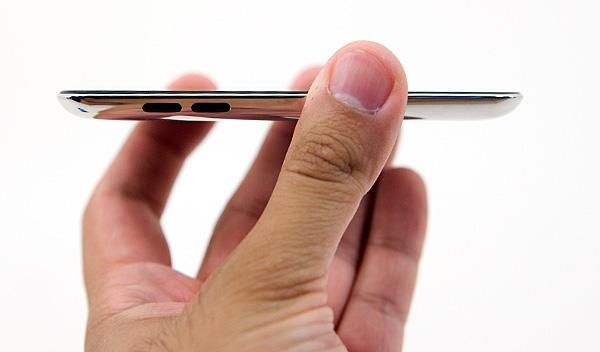
We know Apple’s strength has always been design. But though the original iPad is a beautifully designed piece of hardware, it’s likely that in order to cement their design lead, Apple will move to an iPod Touch style design.

By that, I mean the back of the device will taper to the edge, and the back will be covered in something more ‘luxurious’ that the brushed aluminum look it has now.

More to the point, it will be the thinnest tablet out there – mainly so Tim Cook (who we assume will run the keynote) can say “this is the thinnest tablet out there”. And a glossy, silver back will starkly distinguish the iPad 2 from the Xoom, Playbook et al.

It’s a shame, as I quite like the slab design of the current iPad, but competition often means simply needing to differentiate a product.

Keeping Costs Down Means No Retina

The iPad 2: How Will Apple Stay Ahead of the Pack?

Those clamoring for a ‘retina display’ on the iPad – i.e. a doubled resolution of 2048 × 1536 – are, to put it nicely, a bit nuts.

Not only would it require an incredibly expensive screen, you would also need a very fast CPU-GPU combo (probably quad-core) to drive the 3D effects of iOS at that resolution, which would itself cause battery-life headaches.

On top of that, after asking app developers to adjust the resolution of their apps for the iPhone 4, Apple will now ask them to do it all over again for the iPad apps they just wrote? I don’t think so. If you’re dead set on a ~10″ retina display, wait for an iPad 3.

But in order to stay ahead, look for an improved display in terms of brightness and viewing angles.

Cameras, *yawn*, Facetime, Dual-Core, More RAM etc.

There is some stuff on the way that could only be surprising if it’s not included. Those things are cameras on the back and front and a dual-core A5 Apple ARM-based processor – probably running at 1.2GHz. Yawn.

Since the iPad only has 256MB of RAM, this will obviously get an upgrade too, though whether it’s to 512MB or 1GB is likely a matter of cost. I’d expect the latter, since iOS quite strict in how it handles multi-tasking. 1GB might be overkill.

The only surprise might be the lack of a rear camera. It’s unlikely, because we’ve seen cases with holes for a camera. But I’d like to think that Apple might be saner than some other tablet manufacturers: who wants to hold up a 10″ tablet to take pictures? No-one, that’s who.

All of this will be added simply to keep pace with upcoming Android tablets and the Playbook.

Possible Surprises? Price? No Home Button? Holographic Projection?

Holoographic projection? Yeah, I was just messin’. I don’t even know what that is.

But no home button? A possibility. After all, we’ve already seen gestures that make the home button somewhat obsolete. (Though that does limit multi-finger gestures to the OS rather than apps.) It would also line up with Steve Jobs notorious hatred for buttons, and would make a lot of sense given that the iPad is used as much in landscape mode as it is portrait.

What about the price? Well, it may be optimistic to think it will be cheaper, but look at Apple’s projected figures of 40 million units for 2011. In 2010, they sold 15 million units. Is it possible that, due to Apple’s control of the supply chain – in things like their huge $8 billion deal with Samsung – that they could drop the base unit down to $399? What else might account for more than doubling sales projections for a product with an average selling price of around $700? Yes, the product is insanely popular; but is it so popular that 40 million people around the world will drop the cost of a new laptop?

Let’s say there’s a 50/50 chance Apple will cut prices by a $100 across the line.

What Do You Want in an iPad 2?

Overall, the iPad’s market lead won’t be about hardware as much as it will be about iOS. It will be about how Apple’s ecosystem is positioned as the most appealing. So expect a modest, if overhyped upgrade to the original.

But what about you ahlidesain readers? 4G? A USB or Lightpeak port? NFC? SD expansion slot? What do you want to see in the next iPad? Hit the comments and let us know.

Continue Reading


Copyright 2010 All Rights Reserved | Super Template by Ilmu Komputer | Modified by Ilmu Grafis | Original Wordpress theme by Ahli Desain